Post-processing plays a crucial role in enhancing the quality and reliability of metal 3D printed parts 3D printed metal . By applying the right finishing methods, manufacturers can achieve smoother surfaces, improved strength, and greater durability. These techniques ensure that every component meets the high standards required in dental, medical, and industrial applications. With the rise of 3D printer metal, mastering post-processing has become essential for delivering precision and long-lasting results.
3D Printer Metal Post-Processing: Achieving Smooth and Durable Results
Post-processing is the key to transforming raw 3D printed metal parts into high-quality, functional components. Techniques such as polishing, grinding, and heat treatment enhance the surface finish while eliminating imperfections. This not only improves the appearance but also ensures the strength needed for dental and medical applications. By applying these methods, every 3D printed piece achieves smooth and precise results.
Durability is a major advantage of effective post-processing in 3D printer metal production. Stress relief, sintering, and coating methods help strengthen the internal structure of printed parts. These processes minimize weaknesses and ensure consistent performance even under demanding conditions. For dental technicians and laboratories, this means reliable parts that maintain quality over time.
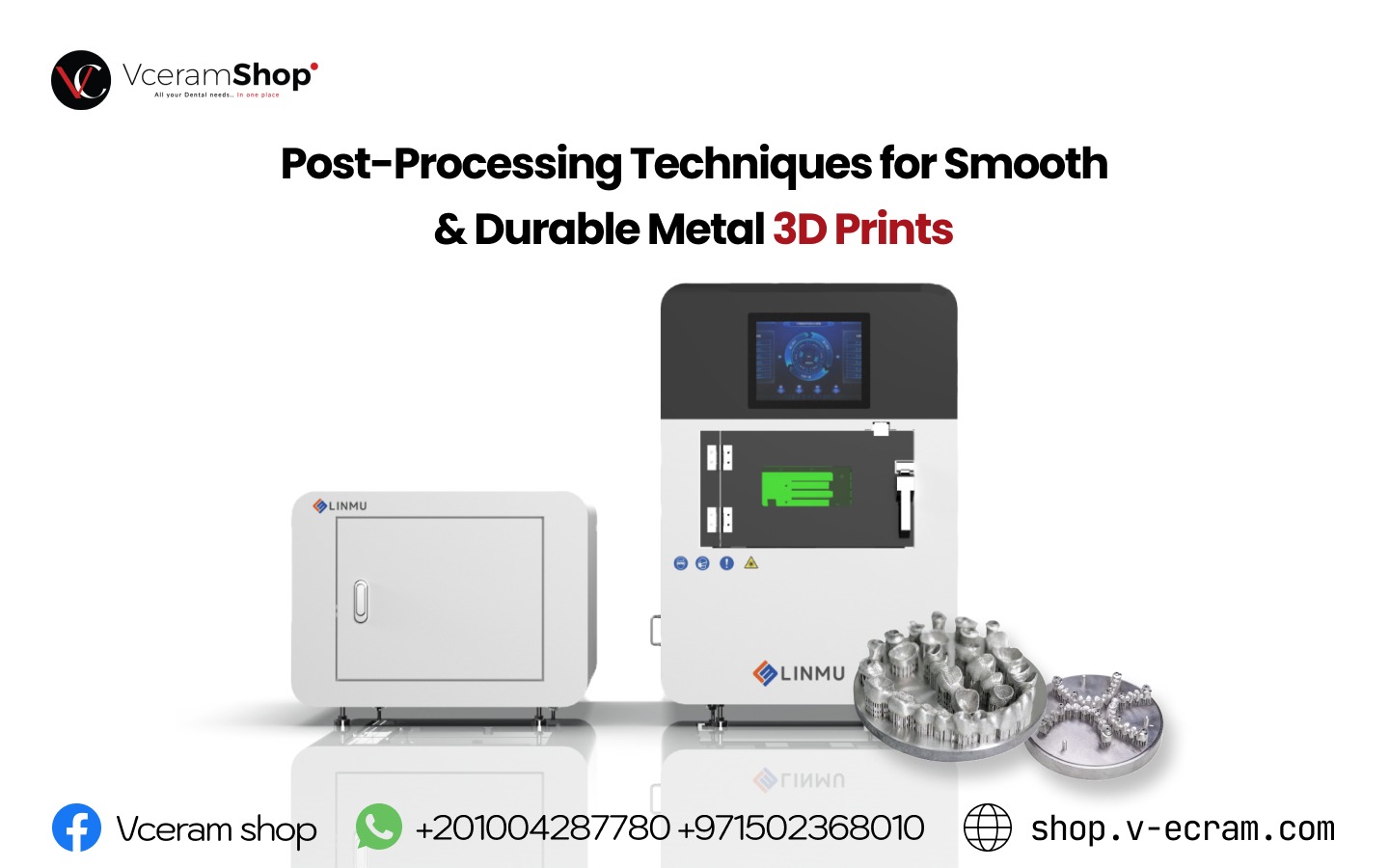
Advanced machines, as highlighted in the brochure, are designed to work with multiple materials such as zirconium, PEEK, and hybrid ceramics, making post-processing even more efficient. Auto-calibration and high-speed precision ensure that each part is ready for finishing with minimal manual effort. When combined with the right post-processing techniques, these machines deliver smoother surfaces and long-lasting durability, meeting the highest industry standards.
For Reading more Articles
How Metal 3D Printing Works: A Beginner’s Guide
The Pros and Cons of Metal 3D Printing: Is It Worth It?
How to Perfect Your 3D Printer Metal Parts with Post-Processing Techniques
Post-processing techniques are essential for refining 3D printed metal parts and achieving the highest level of precision. Methods like polishing, blasting, and heat treatment help remove imperfections and enhance surface quality. This ensures the components are not only visually appealing but also ready for demanding dental and industrial use. Proper finishing guarantees accuracy in every detail.
When working with 3D printer metal, durability is a top priority. Stress relief and sintering processes strengthen the internal structure of printed parts, reducing the risk of cracks or weaknesses. These steps improve mechanical performance and extend the product’s lifespan. For professionals, this means producing parts that deliver consistent quality over time.
Modern milling and printing machines, like those featured in the brochure, support a wide range of materials including zirconium, PMMA, and hybrid ceramics. Their auto-calibration and high-speed precision minimize manual adjustments, making post-processing faster and more effective. By combining advanced equipment with the right finishing techniques, dental labs and technicians can achieve smooth, durable, and reliable results.
3D Printer Metal Finishing Methods for Stronger and Smoother Prints
Finishing methods play a crucial role in turning raw 3D printed parts into high-performance components. Techniques like polishing, tumbling, and blasting improve the surface texture, making the parts smoother and more visually appealing. This step is particularly important in dental and medical fields where accuracy and aesthetics are essential. A well-finished surface also helps in maintaining hygiene standards.
Strength is another major benefit of proper finishing in 3D printer metal applications. Heat treatment and stress-relief processes enhance the internal structure of the printed part, minimizing risks of deformation or cracks. These methods ensure that the components can withstand mechanical stress and long-term use. For technicians, this means reliable results that meet industry expectations.
Advanced machines, as highlighted in the brochure, provide automated calibration and high-speed precision to reduce manual errors during production. When combined with the right finishing methods, this technology allows professionals to achieve smooth surfaces and stronger parts with less effort. The result is a cost-effective and efficient workflow for dental labs and industrial users alike.
Boosting Durability and Surface Quality with 3D Printer Metal Post-Processing
Durability is a defining factor in the success of metal 3D printed parts. Post-processing techniques such as sintering, coating, and hardening increase the strength and resilience of every component. These methods ensure that the final product can handle daily use without losing its structural integrity. For dental applications, this translates into longer-lasting restorations and prosthetics.
Surface quality is equally important, especially when producing parts for medical and technical use. Polishing and blasting help remove any layer lines, resulting in a smoother and more professional finish. This not only improves the visual appeal but also enhances comfort and performance. With the right 3D printer metal finishing process, every piece achieves premium quality.
The machines featured in the brochure are designed to work efficiently with materials like zirconium, PMMA, and hybrid ceramics. Their advanced technology reduces the time and effort needed for post-processing, while maintaining precision. By integrating these tools with proven finishing methods, professionals can deliver durable and smooth parts that meet the highest industry standards.
Post-processing techniques are essential for achieving stronger, smoother, and more durable results with 3D printer metal. By combining advanced machines with effective finishing methods, dental and medical professionals can ensure precision and reliability in every part. For more details or to order the latest solutions, you can contact VCERAM through the following branches:
Syria: +963996426585 – Cairo, Egypt: +20-1004287780 – Alexandria, Egypt: +20-1099114708 – Dubai, UAE: +971502368010
shop.v-ceram.com