Choosing the right metal alloy is crucial for achieving precision, strength, and long-term durability in 3D printing applications. Whether you’re working in dental labs, medical fields, or industrial settings, material selection directly affects performance. With advanced machines and techniques, 3D printer metal has become more accessible and reliable than ever. In this guide, we’ll explore the best 3D printer metal alloys and their most effective uses.
What Makes a Metal Alloy Ideal for 3D Printing?
An ideal metal alloy for 3D printing must combine high strength with excellent thermal and chemical resistance. These properties ensure stability during the printing process and durability in real-world applications. Alloys like titanium, cobalt-chrome, and stainless steel are commonly used due to their performance under heat and pressure. In dental and medical fields, biocompatibility is also a key factor.
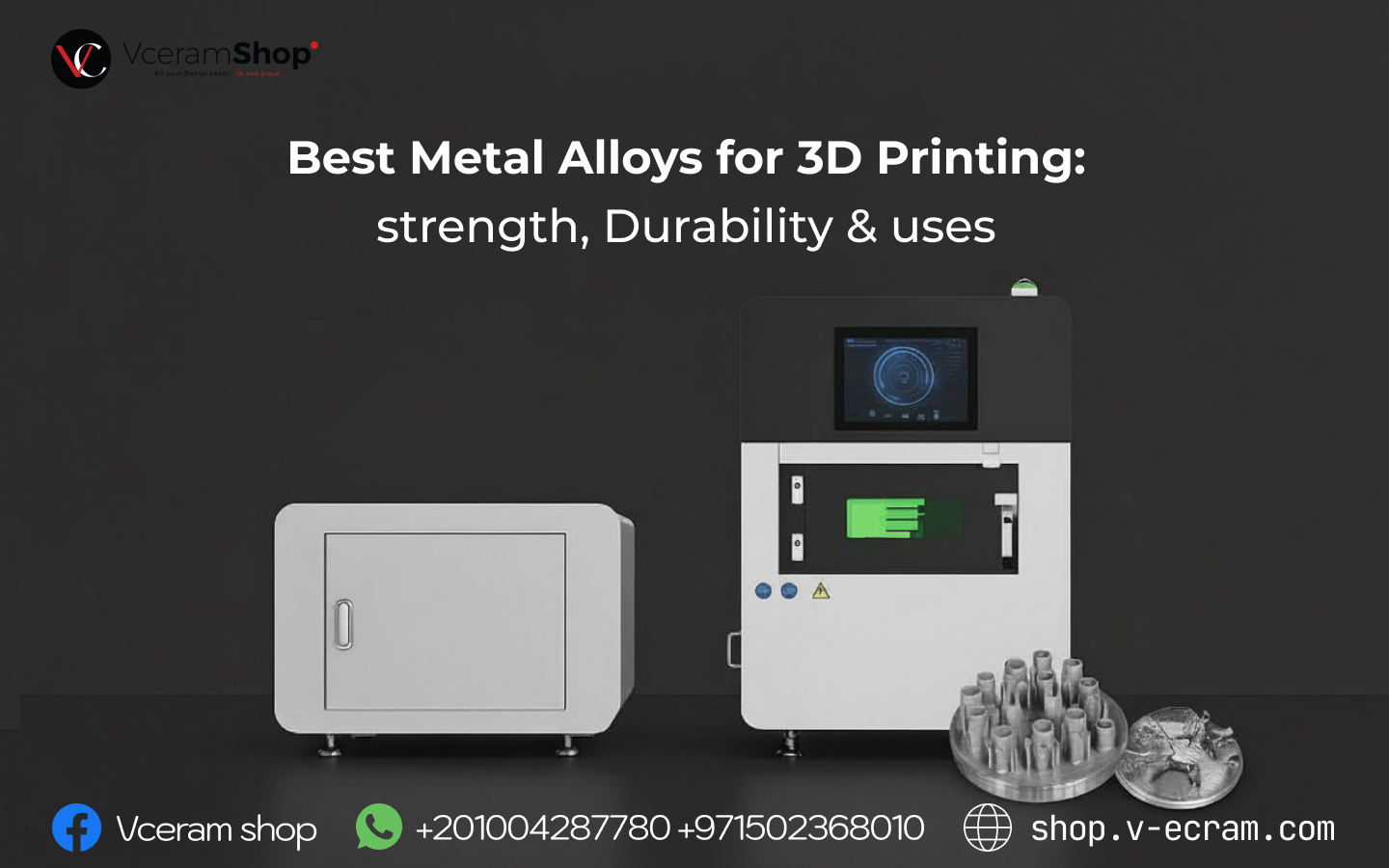
Printability is another essential aspect — the alloy must be compatible with the machine’s laser system and layer-fusion process. For example, the machine in your brochure utilizes advanced selective laser melting (SLM), which works best with fine-grain, homogenous metal powders. This ensures smoother surfaces and higher detail resolution, critical in dental restorations and precision parts. A poorly suited alloy can result in weak bonding or rough finishes.
For Reading more Articles
How Metal 3D Printing Works: A Beginner’s Guide
The Pros and Cons of Metal 3D Printing: Is It Worth It?
Finally, the ideal metal alloy should offer a balance between mechanical performance and cost-efficiency. Materials like cobalt-chrome offer excellent wear resistance, making them perfect for crowns, bridges, and implant parts. When used with machines like the one in your brochure — optimized for minimal waste and consistent density — these alloys deliver high ROI. Choosing the right 3D printer metal can significantly boost both quality and productivity.
Top 3D Printer Metal Alloys Used in Dental and Medical Applications
Cobalt-chrome is one of the most widely used 3D printer metal alloys in dental and medical applications. It’s known for its high strength, corrosion resistance, and biocompatibility — all essential in producing crowns, bridges, and removable partial dentures. The machine featured in your brochure supports cobalt-chrome powders and uses precision laser melting to ensure accuracy. This makes it ideal for labs that need both quality and consistency.
Titanium alloys, particularly Ti6Al4V, are a top choice in surgical implants and high-performance dental prosthetics. They are lightweight, durable, and highly compatible with the human body. When printed using advanced SLM systems like the one in your brochure, titanium parts achieve high density and excellent surface quality. These features are critical for implant longevity and patient safety.
Stainless steel is another popular alloy, especially for surgical tools, temporary crowns, and orthodontic components. It’s cost-effective and offers good mechanical strength, making it suitable for general-use applications. Your 3D printer’s ability to maintain stable temperature control and uniform layer fusion enhances the material’s performance. This makes stainless steel a practical choice for labs balancing performance with affordability.
Comparing Metal Alloys: Strength, Weight, and Cost in 3D Printing
When comparing 3D printer metal alloys, strength is a key factor in determining the right material for dental and medical use. Cobalt-chrome offers exceptional mechanical strength and wear resistance, ideal for load-bearing restorations like bridges. The SLM technology used in your machine ensures precise layer bonding, enhancing structural integrity. This makes cobalt-chrome reliable for long-term, high-stress applications.
In terms of weight, titanium stands out for its strength-to-weight ratio, making it perfect for lightweight implants and prosthetics. It reduces pressure on surrounding tissues while maintaining structural performance. The machine’s capability to process fine titanium powder with high accuracy minimizes post-processing. This adds efficiency without compromising on quality or patient comfort.
Cost varies significantly across alloys — stainless steel is more affordable than titanium or cobalt-chrome but may lack the same level of performance in specialized cases. However, the printer’s efficient powder usage and high print repeatability reduce material waste and long-term expenses. Labs can optimize output by matching alloy choice with case complexity and budget. Balancing strength, weight, and cost is easier with a machine built for precision and versatility.
How to Choose the Right Metal Alloy for Your 3D Printing Machine
Selecting the right metal alloy starts with understanding your application—whether it’s dental crowns, surgical implants, or orthodontic parts. Different alloys offer different strengths: cobalt-chrome is ideal for durability, titanium for lightweight biocompatibility, and stainless steel for cost-efficiency. Your machine’s SLM technology ensures that each material performs at its best through precise laser melting. This precision allows for fine detail, making material choice even more impactful.
Compatibility with your 3D printer is crucial. Not all machines handle all powders equally, but the model in your brochure is optimized for various certified metal alloys. It maintains tight temperature control and uniform powder distribution—key to preventing defects during printing. This flexibility allows your lab to switch between materials without sacrificing accuracy or repeatability.
Finally, consider factors like budget, part longevity, and finishing needs. For example, titanium may cost more upfront but offers superior long-term value in implants. With your machine’s high-density printing and smooth surface finish, post-processing time and material waste are significantly reduced. Choosing the right 3D printer metal isn’t just about the material—it’s also about how well your printer brings out its full potential.
Choosing the right 3D printer metal alloy can transform the quality, precision, and durability of your dental or medical production. With the right material and a high-performance SLM machine, your lab can achieve consistent, high-quality results.
📍 For expert support and advanced 3D printing solutions, contact us:
Cairo, Egypt: +20 100 428 7780
Alexandria, Egypt: +20 109 911 4708
Damascus, Syria: +963 996 426 585
Dubai, UAE: +971 50 236 8010
🌐 Visit us online: https://shop.v-ceram.com