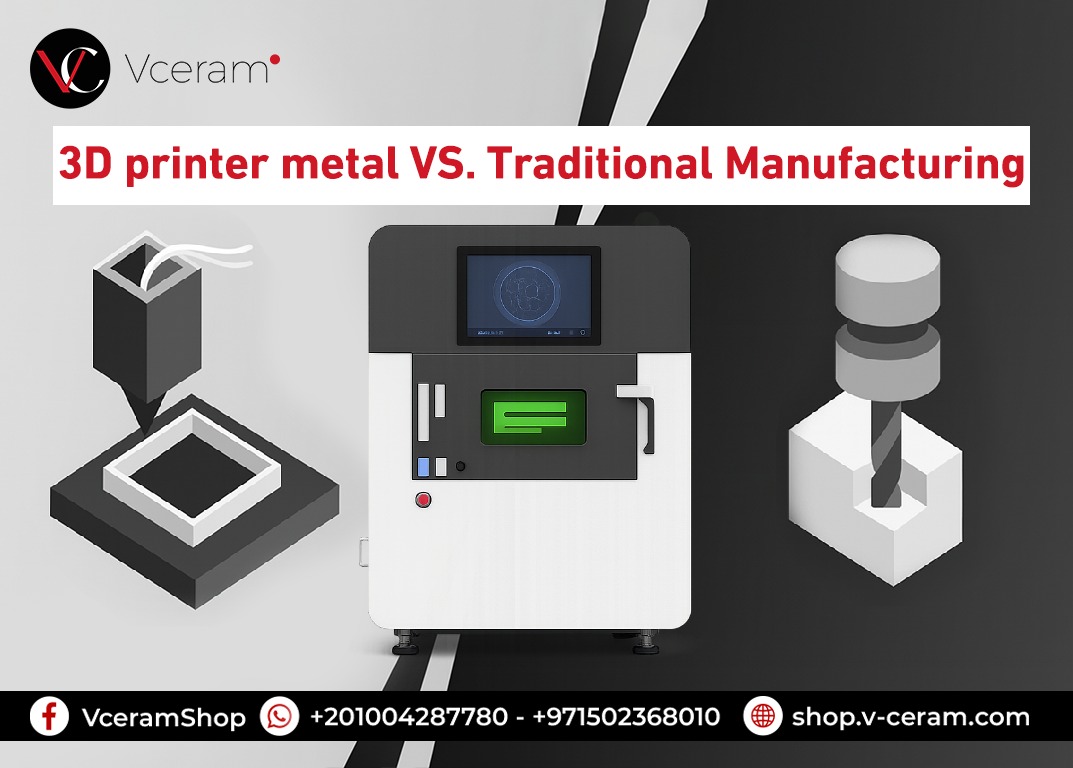
As dental technology evolves, the comparison between 3D printer metal and traditional manufacturing has become more relevant than ever. Each method offers unique benefits and limitations, especially in terms of precision, speed, and material efficiency. Dental labs are now rethinking their workflows to match modern demands. This article explores the key differences to help you decide which approach suits your practice best.
Workflow Efficiency: How 3D Printer Metal Outperforms Traditional Dental Methods
One of the biggest advantages of using 3D printer metal in dental labs is the significant reduction in production time. Traditional methods often involve multiple steps—wax modeling, casting, finishing—which can take days. In contrast, metal 3D printing enables direct digital-to-physical production, minimizing human intervention. This speeds up the workflow and shortens delivery timelines.
For Reading more Articles
How Metal 3D Printing Works: A Beginner’s Guide
The Pros and Cons of Metal 3D Printing: Is It Worth It?
According to the brochure, the compact design of modern dental metal printers makes them easy to install in any workspace. Their flexible deployment and minimal setup time help labs respond to urgent cases more efficiently. With no need for extensive tooling or molds, technicians can start printing immediately. This allows for faster case turnover and improved lab productivity.
Furthermore, 3D printer metal systems are highly automated, requiring less manual labor and reducing the chance of human error. Once the design is finalized in CAD software, the machine can handle the rest with consistent results. This not only streamlines the process but also frees up technicians to focus on more complex tasks. The result is a smoother, more scalable dental production workflow.
Material Usage and Waste: 3D Printer Metal vs. Casting Techniques
One of the key benefits of using 3D printer metal technology is its efficient material usage. Unlike traditional casting, which often requires creating wax patterns, molds, and excess metal, 3D printing uses only what is needed. The additive manufacturing process builds the object layer by layer, minimizing raw material waste. This leads to cost savings and a more sustainable workflow.
In traditional dental casting, much of the metal used in the process is lost during melting, trimming, and polishing. Even with recycling, these steps involve material loss and energy consumption. 3D metal printing reduces this dramatically by eliminating the need for casting channels or supports. As a result, labs can achieve greater output with less raw material.
According to the brochure, the printer is designed for high-precision fabrication with minimal post-processing, which also reduces material loss. There’s no need for overbuilding to compensate for inaccuracies, as seen in conventional methods. This makes 3D printing an ideal solution for dental labs aiming to optimize resources. The reduction in waste directly supports more efficient and eco-friendly operations.
Precision and Customization in Dental Prosthetics
The use of 3D printer metal technology in dental prosthetics delivers unmatched precision. It enables the creation of intricate structures like crowns, bridges, and frameworks with micron-level accuracy. This ensures a snug, exact fit that reduces the need for manual adjustments. The result is greater comfort for patients and improved clinical outcomes.
Customization is another area where 3D metal printing surpasses traditional methods. Each prosthetic can be tailored precisely to the patient’s anatomy, using digital scans and CAD software. The technology allows for individualized designs without extra time or cost. This is especially valuable for complex or unique dental cases that require high attention to detail.
As noted in the brochure, the printer supports efficient and repeatable production with consistent quality. There’s minimal variation between prints, even when producing highly customized prosthetics. This consistency builds trust among dental professionals and allows labs to handle larger volumes confidently. Precision and personalization no longer have to be a trade-off.
Cost and Space Considerations for Modern Dental Labs
When evaluating 3D printer metal technology, initial cost is often a key concern for dental labs. These machines typically require a significant upfront investment, including hardware, software, and training. However, they often pay off in the long run by reducing outsourcing costs and improving efficiency. The ability to produce high-quality prosthetics in-house leads to better margins over time.
Space is another critical factor, especially for labs operating in tight or urban environments. According to the brochure, the featured metal 3D printer has a compact, space-saving design. It can be installed easily in various settings without requiring extensive renovations or industrial infrastructure. This flexibility allows even small labs to integrate advanced technology seamlessly.
In addition to saving space, the printer’s portability and ease of deployment enhance its practicality. It can be moved or repositioned as needed, supporting growing teams and evolving workflows. With low energy consumption and minimal setup requirements, it’s a smart investment for labs seeking to modernize without expanding their footprint. Cost and space efficiency go hand in hand in today’s digital dental landscape.
In summary, adopting 3D printer metal technology can transform your dental lab by enhancing precision, saving space, and reducing long-term costs. Whether you’re upgrading from traditional methods or starting fresh, this is a smart step toward digital excellence. Explore our full range of dental 3D solutions at shop.v-ceram.com. For expert support, contact us at your nearest branch:
Syria: +963 996 426 585 | Cairo: +2 0100 428 7780 | Alexandria: +2 0109 911 4708 | Dubai: +971 50 236 8010.